
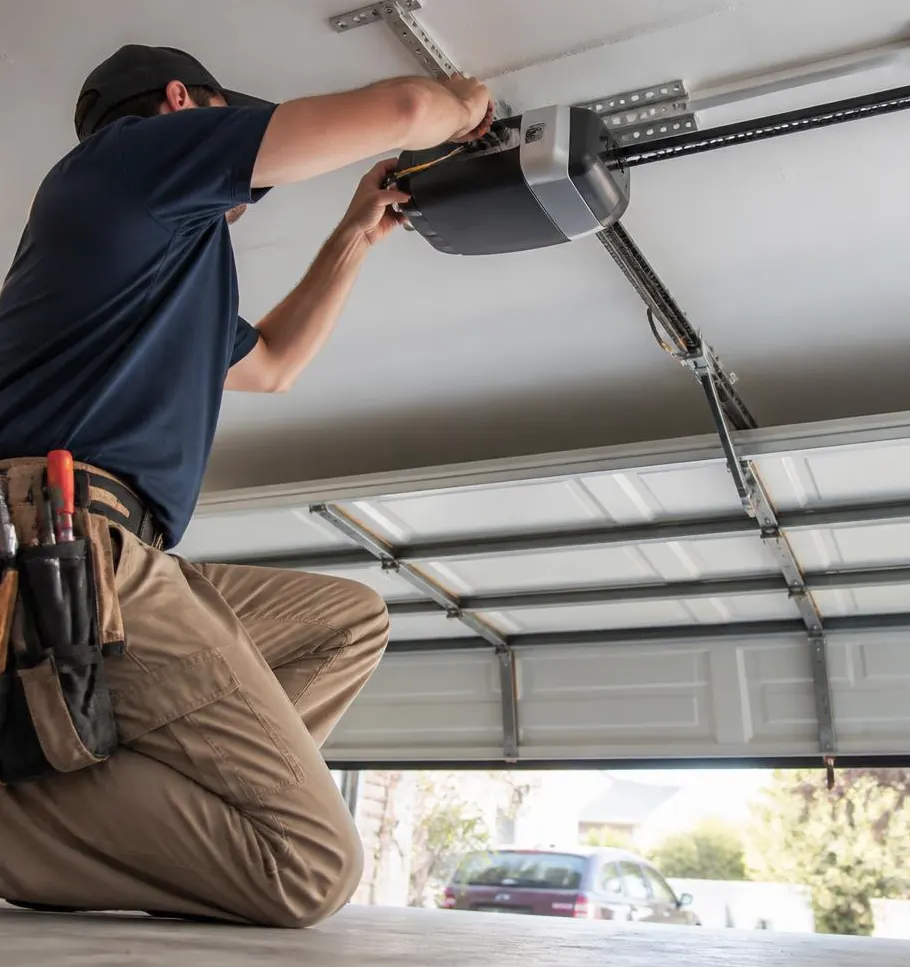
The 6 a.m. Rumble That Starts the Argument
It's early, the garage is cold, and someone needs to leave for work before sunrise. The opener kicks on and the whole house hears it—a grinding, chain-slapping rattle that echoes through shared walls and wakes up anyone sleeping near the garage. If that sound has gotten louder as temperatures dropped, you're not imagining it. Cold, dry winter air thickens lubricant and tightens metal tolerances, which makes an aging or mismatched opener noisier than it was in July. Before you replace it with whatever's on sale, it helps to know what you're actually choosing between.
Chain-Drive Openers
Chain drive is the old reliable. A metal chain pulls the trolley along a rail, the same way a bicycle chain pulls a sprocket.
- Noise: The loudest option by a clear margin. Metal-on-metal contact transmits vibration into the door track and framing, which is worse if your garage shares a wall with a bedroom or laundry room.
- Price: The cheapest to buy, typically in the lower end of national opener price ranges.
- Lifespan: Very durable mechanically—chains can outlast several motors if maintained—but they need periodic lubrication and tension adjustments, especially after big temperature swings that cause the chain to expand and contract.
Belt-Drive Openers
Same basic mechanism as chain drive, but the chain is replaced with a reinforced rubber or polyurethane belt.
- Noise: Noticeably quieter. No metal links, so you lose most of the rattle and clank. Still has a motor hum, but it's far less intrusive.
- Price: A step up from chain drive, usually a moderate premium.
- Lifespan: Belts handle temperature swings and dry air well and don't need lubrication, but extreme cold can make the belt stiffer for the first cycle or two on a frigid morning—a minor quirk, not a defect.
Screw-Drive Openers
Instead of a chain or belt, a threaded steel rod turns to move the trolley directly.
- Noise: Moderate—quieter than chain, louder than belt. Fewer moving parts means less rattle, but the motor itself can be noticeable.
- Price: Comparable to belt drive in most cases.
- Lifespan: Reliable mechanically, but the lubricant on the screw is sensitive to temperature extremes. In a garage that swings from freezing nights to sunny afternoons, that lubricant can thicken or thin unevenly, leading to more frequent maintenance than belt or chain systems.
Direct-Drive Openers
The motor itself travels along a stationary chain fixed to the rail, rather than pulling a trolley.
- Noise: The quietest of all four, since there's only one moving part and no belt or chain stretching across the rail.
- Price: The highest upfront cost of the group.
- Lifespan: Very few parts to wear out, which tends to mean fewer repairs over time, but replacement parts and specialized service can be harder to source locally if something does go wrong.
What Actually Matters for Homes Here
In Utah County's climate, two things push the decision more than brand names or features: temperature swings and shared walls. Garages here regularly see highs and lows that differ by 30°F or more in a single day, especially heading into winter. That kind of swing is harder on chain and screw-drive lubrication than it is on belt or direct-drive systems. If your garage sits under or next to a bedroom—common in many Vineyard floor plans—the noise difference between chain and belt is not subtle; it's the difference between waking the house and not.
For a typical attached garage in this area, a belt-drive opener is usually the sweet spot: quiet enough for early mornings and late nights, tolerant of the temperature swings, and priced in the middle of the range rather than at the top. Direct-drive is worth the extra cost if noise is your top priority and you don't mind a longer wait on parts. Chain drive still makes sense for detached garages or workshops where noise isn't a concern and budget is tight.
When to Call Vineyard Garage Door Works
If your current opener is grinding, slipping, or struggling to lift the door evenly—especially after a cold snap—it's worth a look before the motor burns out entirely. Vineyard Garage Door Works handles garage door opener installation for all four drive types and can walk through which one fits your garage's layout and your household's schedule. If the opener seems fine but the door itself is sagging, binding, or off-balance, that's often a spring issue rather than an opener issue, and their spring replacement service addresses the real cause instead of masking it with a new motor.
If mornings in your garage sound more like a construction site than a home, call Vineyard Garage Door Works for a straight answer on what's actually going on and what it'll take to fix it right, for homeowners throughout Vineyard, UT and the surrounding Utah County area.